Shape the battlefield
Terrain is an active gameplay system, not a static environment.
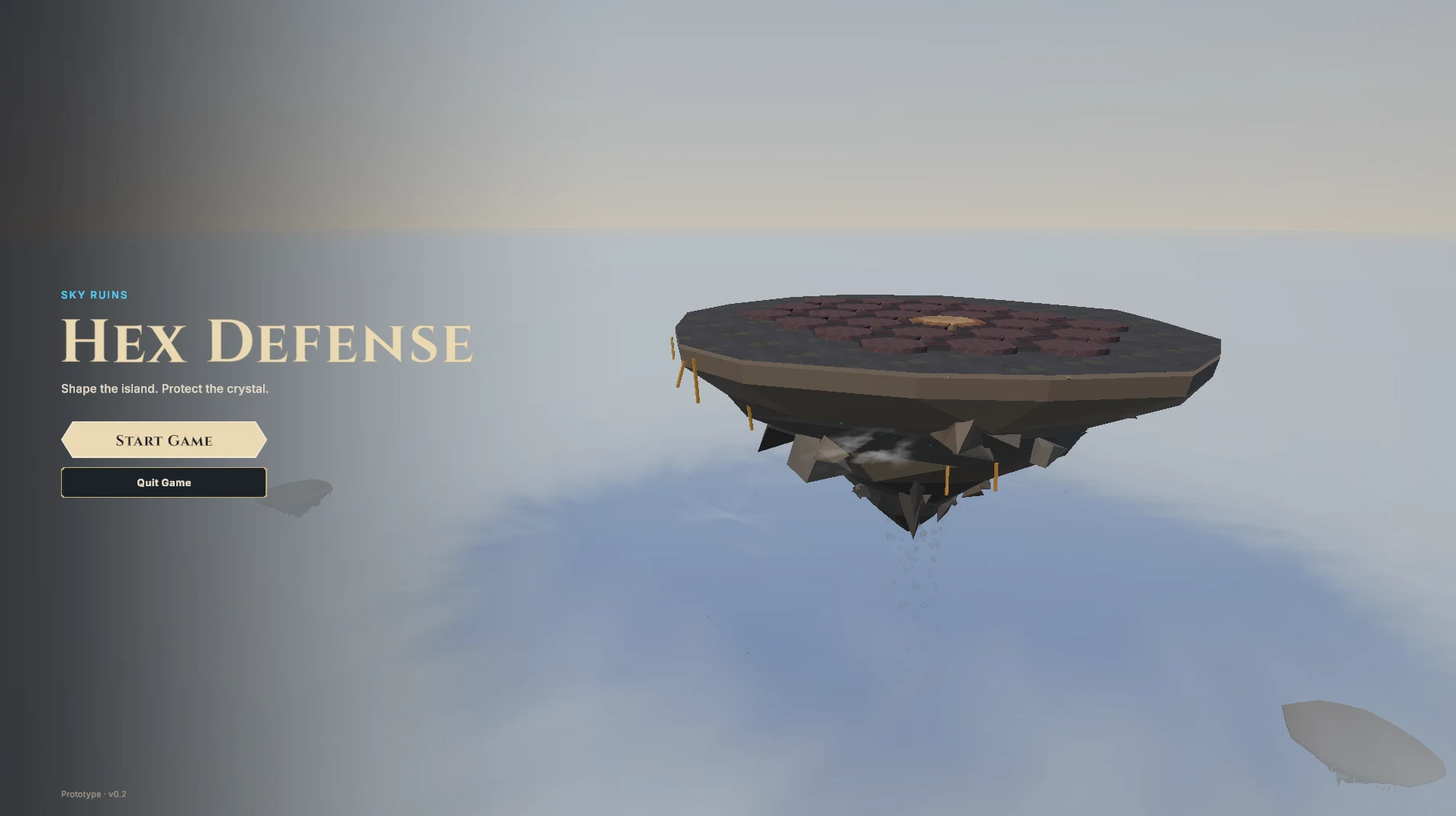
Hex Defense explores a simple design question: what if the battlefield itself became the player’s primary strategic tool? Rather than defending a fixed path, players reshape a floating hex-grid island, alter terrain elevation, expand territory and manipulate enemy routes. Each terrain decision affects enemy movement, defensive effectiveness and resource allocation.
I define the game vision, gameplay rules, interconnected systems and development priorities. My responsibilities include systems design, progression, economy, balancing, art direction and iterative playtesting.
The project uses AI-assisted implementation: I define requirements and acceptance criteria, evaluate technical proposals, validate implementations and refine the experience through hands-on testing.
Terrain is an active gameplay system, not a static environment.
Strategic advantages come with corresponding costs.
Players should understand the consequences of their decisions.
Individual mechanics interact to create strategic possibilities.
Read upcoming threats.
Claim, raise and build.
Survive the wave and use active powers.
Earn Aether, choose runes and upgrade.
Preparation is a deliberate planning phase. War plays out in real time, with limited terrain changes and active abilities available to adapt the strategy.
Higher terrain increases defensive reach while reducing attack frequency or effect intensity. I designed elevation as a choice between coverage and concentrated defense, not a linear upgrade.
Weighted hex-grid pathfinding assigns a cost to climbing. Terrain changes trigger route recalculation, while predictive previews show consequences before committing.
I separated controlled territory from the overall island to preserve enemy routes while limiting early buildable space. Claiming tiles creates expansion and resource allocation decisions.
Bridge destruction could isolate whole regions. I established a Core-reachability rule, validated through breadth-first search, to prevent invalid connections while preserving route manipulation.
Omen offers combine a curse, blessing and reward. Filtering offers against the next wave makes risk relevant to the player’s current defensive strategy.
A 30-wave, three-act campaign introduces structures and mechanics gradually. Guided actions and staged unlocks reduce early complexity before more demanding combinations appear.
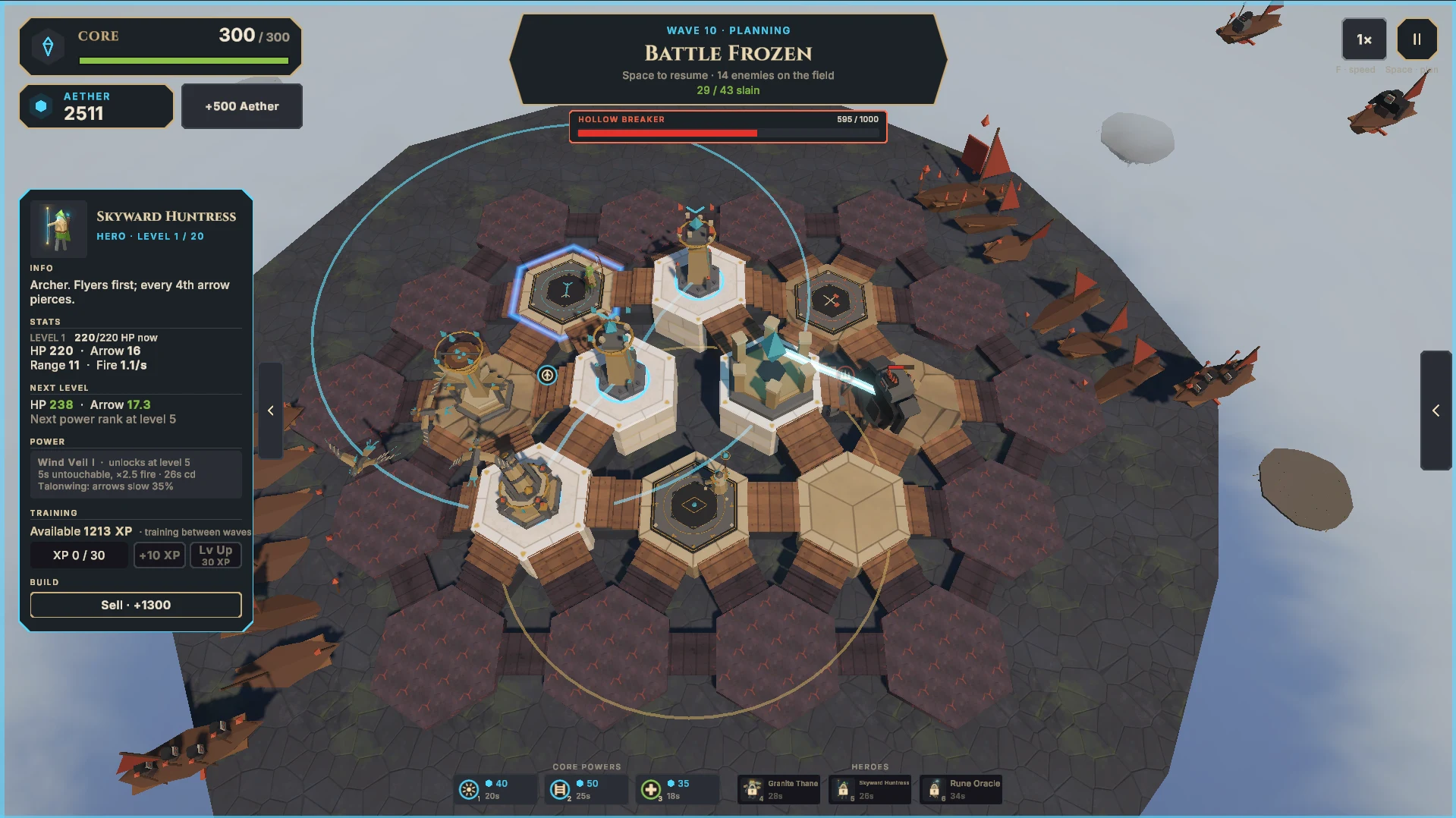
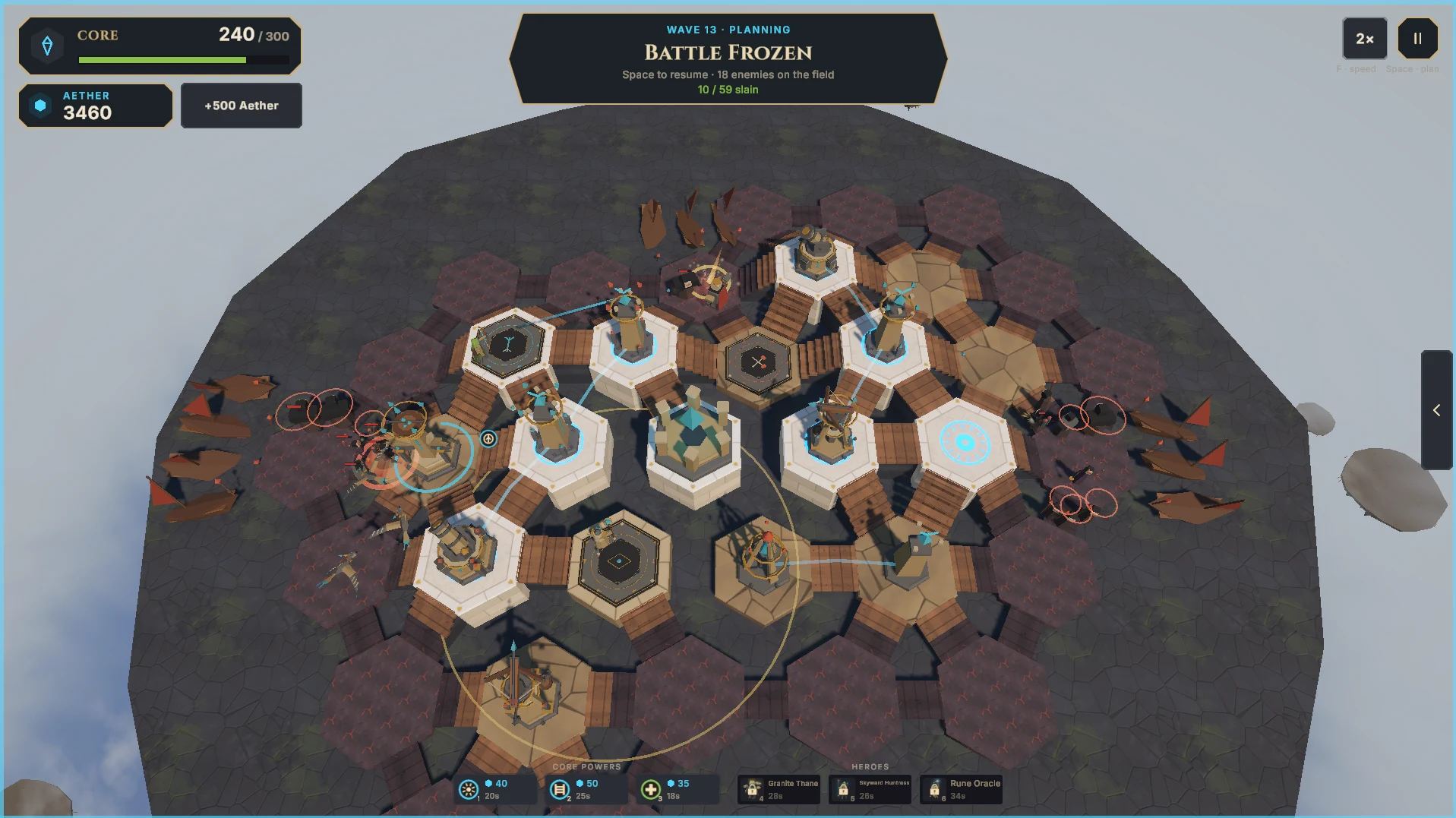
Actual development screenshots. Work-in-progress terrain and debug controls are visible.
Dynamic Dijkstra routing based on terrain cost and bridge connectivity.
Route and range previews show the effects of potential changes.
Designer-adjustable wave plans, tuning parameters and HUD settings.
Terrain, structures, enemies and progression communicate through events and shared rules.
Development controls, runtime feedback and onboarding logs support iteration.
Core gameplay systems and a 30-wave campaign are implemented. Campaign completion has been tested using development tools; full balance validation and external playtesting remain priorities. Next steps focus on terrain readability, asset refinement and progression balance.